

Walking the Summerlands: Remembering Keith John Shrewsbury
January 25th, 1928 – December 6th, 1983
It is on dark December days like this that I think of my father the most, and miss him the most. Forty-one years ago, on a Saturday, Keith John Shrewsbury left this world and stepped away.
Looking back across the span of four decades, I am struck by how much I wish I could have shared with him. There are forty-one years of observations, pains, pleasures, and perceptions that remain discussed only in my internal monologues. He never met his grandson, Morgan Rhys Rowlands, a sadness I carry with me, and he missed the chance to talk through the complexities of a changing world with the generations that followed him.
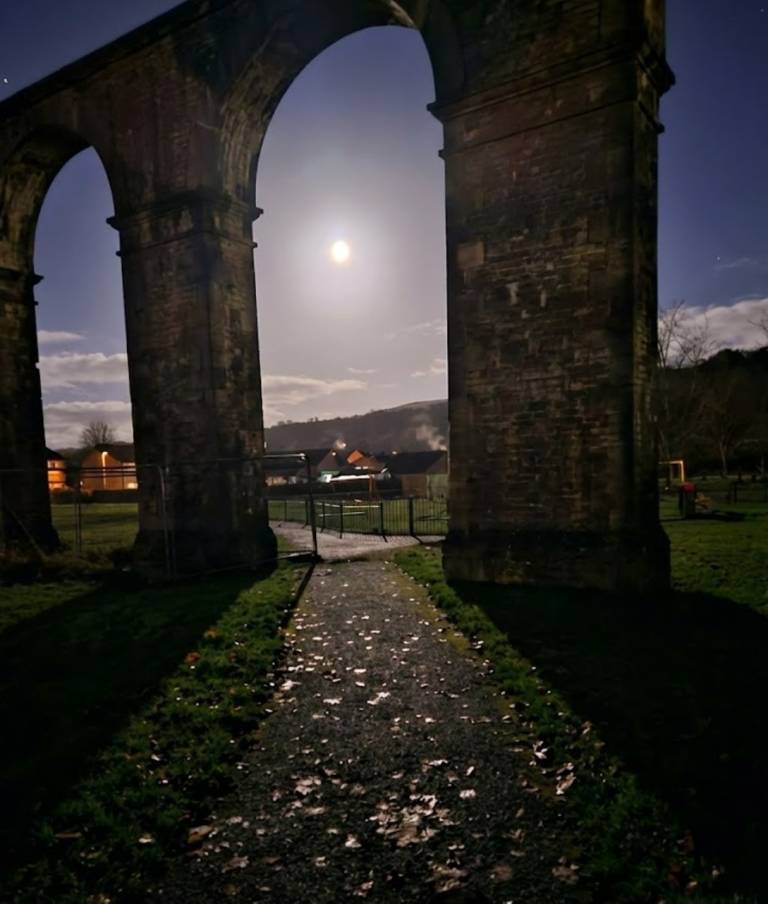 A Stone Worn Smooth
My father lived a life of learning and struggle, of triumph and defeat. He knew disaster and opportunity alike. He was like a stone of self worn smooth by the waters of life; made able to roll, recover, and redesign. He was a phoenix rising from the ashes, keeping the accounts of both the sacred and the profane.
To the outside world, he might have appeared as a man of his time, perhaps hiding behind a slightly eccentric persona or a thin veneer of state Anglicanism. But beneath that, he was a man of passion often out of his time, a Pagan soul. He was a lover of mythology and the mystic, a man of solid reading and deep enquiry.
He was a spiritual humanist and a fierce opponent of prejudice. Long before formal anti-racism became part of the societal lexicon, he was an anti-racist. He was a materialist of the mystic and a doubter of accepted "truths." He left me with a nascent anthropology of society; he was a student of faiths who loved other cultures and accepted everything except prejudice and ignorance.
The Valley of the Gods
Some six months before he died, my father had a near-death experience that profoundly shaped my own spiritual trajectory.
In a dream, he walked through a lush, green Greek valley. Suddenly, he came upon a hunting lodge where he met the old Gods and Goddesses of Greece. The Great God Pan spoke to him, telling him that he was not wanted yet, and he awoke. When he told me this dream, it sparked something irrevocable in me; I have been the radical left-wing neo-Pagan from then on, often hidden, but never denied.
My father was a reader of comparison and a thinker par excellence. He had wanted to be buried at sea, but family politics at the time did not favour it. So, he lies somewhere in a churchyard in Swansea. But that is just geography.
I suspect that as he was buried, the Old Ones came for him. I imagine a doorway opening in a soft shaft of sunlight, allowing him to step aside, avoiding Augustine and Paul, to find Pan and Dionysus, despite all his rational appearance and professional aura. A Pagan, practical person of loving nature and giving nurture, walking the Summerlands.
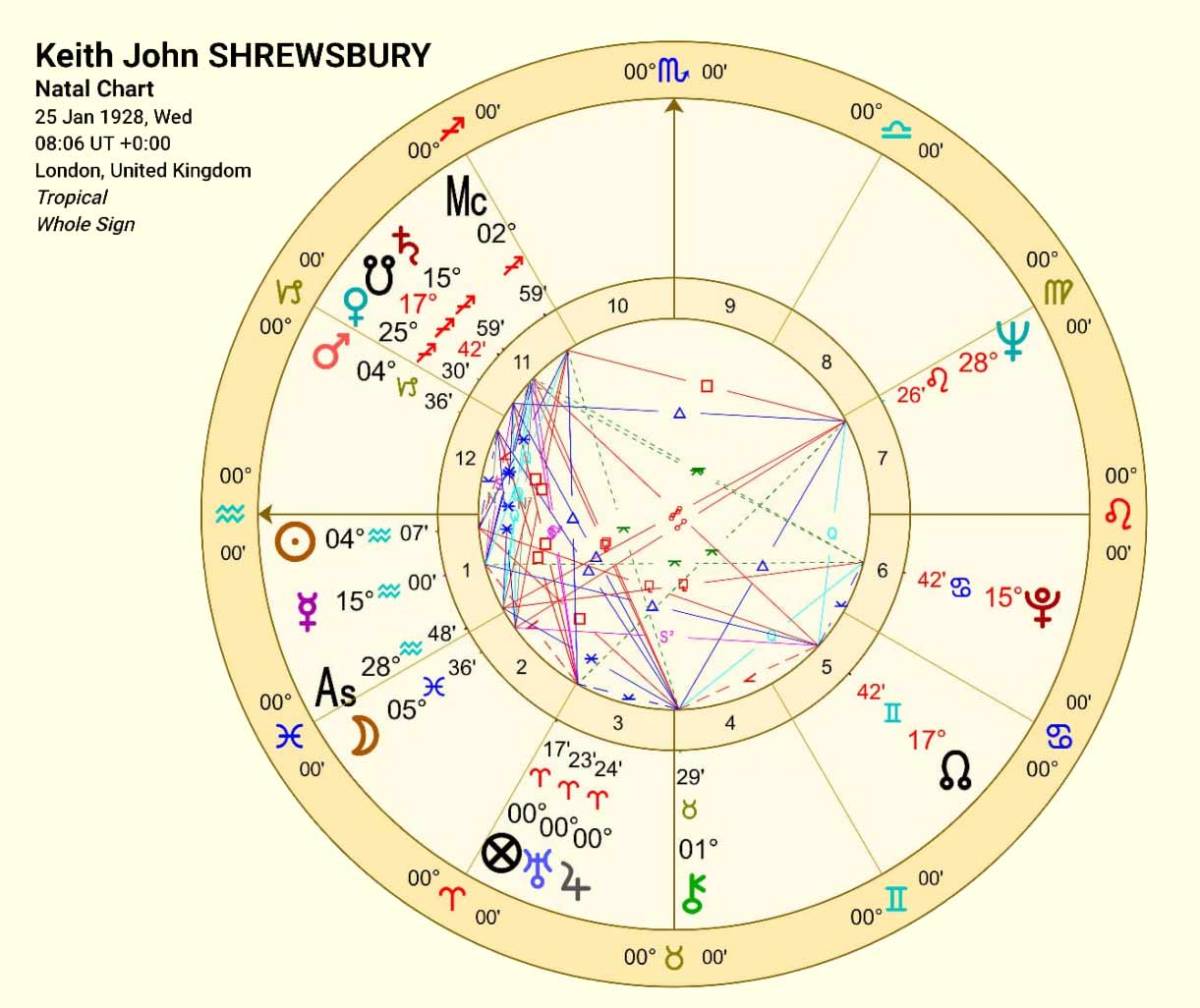
Written in the Stars
Looking at the natal chart of his birth, January 25th, 1928, the celestial map confirms the dual nature of the man I knew. It is the chart of a mystic wrapped in the cloak of a rationalist.
With his Sun and Ascendant in Aquarius, the "eccentric persona" and "spiritual humanist" are clearly written. This placement gave him his fierce independence, his "nascent anthropology," and his role as an "anti-racist before formal anti-racism." He was designed to look at the structures of society and dismantle them with his mind, standing firmly against prejudice as a natural state of being.
Yet, hidden beneath this cool, intellectual exterior lay his Moon in Pisces. This is the placement of the "Pagan soul" and the "materialist of the mystic." It speaks of a deep, oceanic sensitivity and an intuitive connection to the "Summerlands." It was this Piscean influence that allowed him to walk that green Greek valley and hear the voice of Pan.
Perhaps most telling is the powerful conjunction of Jupiter and Uranus in Aries. This is the mark of the "Phoenix from the ashes." It signifies a revolutionary spirit, a man of "passion out of his time," capable of sudden insight and radical renewal. It reflects the "triumph and defeat, disaster and opportunity" he navigated, always ready to start again with explosive energy.
Finally, Saturn conjunct the South Node in Sagittarius paints the picture of the "stone of self worn smooth." Sagittarius seeks truth and higher knowledge, but Saturn here suggests a karmic weight, a struggle with established dogmas, the "thin veneer of state Anglicanism" he wore while his soul sought the older, wilder truths of the ancients. He was a man carrying the wisdom of the past, often feeling restricted by the present, walking a bridge between the conventional world and the mythic realms he truly inhabited.
The Unbroken Cycle
I celebrated him today, and all his works. I remember the day of the birth of my son, when I distinctly smelt his cigarettes in the bathroom of my house in Alltwen, a sign that he was there in spirit if not in body.
As I write these words, I celebrate him once more. I know he would argue with me. He would argue for my account as metaphor and imagination, as literature and learning, or as perception and possibility. He would say, "It is up to you what you believe and describe."
But I know that one day, as a door opens in the veil, I shall step through and walk with him in the Summerlands, and we shall laugh.
In my near 68th year, I often sense him. I know the base of knowledge and love he gave me. So here is to you, Dad. I maintain the rage against the dying of the light. Here I stand, unbowed and proud, as time ticks its path around the full moon in the night sky.
You did not, nor will I, go gentle into that good night. I, the Marxist, the old Pagan, and the Hellenistic Astrologer, follow the cycle of birth, life, and death.
Rest in Power, Keith John Shrewsbury.


